What Does THC Percentage Really Mean? Potency, Effects, and Product Labels Explained
THC percentage is often one of the first details shoppers notice when comparing cannabis products. Flower can be labeled with a wide range of THC percentages, while vape oils and concentrates often display higher concentrations because cannabinoids have been extracted and concentrated.
It is easy to assume that the highest percentage automatically means the strongest or best product. However, THC concentration is only one part of the cannabis experience. The amount consumed, product type, personal tolerance, cannabinoid content, consumption method, and other individual factors can all influence how a product feels.
Understanding what THC percentage means can help adult consumers read labels more confidently, compare products within the same category, and choose options that better match their preferences and experience level.
How THC Percentage Is Calculated
THC, or tetrahydrocannabinol, is the main intoxicating compound in cannabis. It is responsible for many of the effects associated with feeling high.
THC percentage describes how much THC is present compared with the total weight of a product. For example, one gram of cannabis flower labeled at 20% total THC contains approximately 200 milligrams of total potential THC by weight before consumption.
A simple way to understand the numbers is:
- 10% THC equals approximately 100 milligrams per gram
- 20% THC equals approximately 200 milligrams per gram
- 25% THC equals approximately 250 milligrams per gram
- 30% THC equals approximately 300 milligrams per gram
This does not mean the body will absorb every milligram. Some THC may be lost through heating, combustion, vaporization, smoke, and the way the product is consumed.
THC percentage should be viewed as a measure of concentration rather than an exact prediction of how strong a product will feel.
How to Read THC Percentage on a Cannabis Label
Cannabis labels may include terms such as THC, THCA, total THC, THC per serving, and THC per package.
THCA is the naturally occurring acidic form found in raw cannabis flower. It is not strongly intoxicating before being heated. When flower is smoked, vaporized, or cooked, heat converts some of the THCA into active THC through a process called decarboxylation.
Total THC combines the THC already present with the amount that could potentially be produced from THCA. Laboratories commonly estimate it using this formula:
Total THC = THC + (THCA × 0.877)
The 0.877 adjustment accounts for the difference in molecular weight when THCA is converted into THC. Actual conversion and absorption during consumption may be lower and can vary.
California requires nonmanufactured cannabis labels to include total THC as a percentage. Manufactured cannabis products generally list THC and CBD in milligrams per package, with milligrams per serving also required for edibles and concentrates that have designated serving sizes.
When reviewing flower, shoppers should consider total THC along with other information, including:
- CBD and other cannabinoid levels
- Product weight
- Package date
- Batch and testing information
- Available terpene details
- Serving and use instructions
Reading the full label gives shoppers more useful information than focusing only on the largest number.
How THC Levels Vary in Cannabis Flower
There is no single THC percentage that represents all cannabis flower. Levels can vary based on genetics, cultivation methods, growing conditions, harvest timing, moisture content, drying, storage, and laboratory results.
There is also no official percentage that universally defines low-, moderate-, or high-potency flower.
Within the current retail market, products above approximately 25% total THC are often described or marketed as high THC. However, these categories are informal and may vary by producer, retailer, and consumer.
A product with 18% THC may feel strong to someone with limited experience, while a regular consumer may respond differently. Two strains with similar THC percentages may also produce different experiences because their cannabinoid profiles, aromas, product condition, and serving amounts are not identical.
Adults interested in comparing current options can browse Cali Kosher’s cannabis flower selection and review the available product information before visiting a storefront.
What Is Considered a High THC Percentage?
What qualifies as a high THC percentage depends heavily on the product category.
For traditional flower, levels near or above 25% total THC are commonly marketed as high. Vapes and concentrates may display much higher percentages because processing extracts and concentrates cannabinoids while removing much of the original plant material.
A vape cartridge labeled at 75% THC should not be directly compared with flower labeled at 25%. The products are made differently, consumed differently, and typically used in very different amounts.
Infused pre-rolls may also contain more THC than standard flower because they can include added extracts, oils, kief, or concentrates.
For a more useful comparison, evaluate products within the same category:
- Compare flower with flower
- Compare vapes with other vapes
- Compare concentrates with other concentrates
- Compare edible serving sizes with other edible serving sizes
Percentages and milligrams are not interchangeable measurements.
Does Higher THC Mean Stronger Effects?
A higher THC percentage means a product contains a greater concentration of THC. In many cases, that may contribute to stronger effects, but the percentage does not determine the experience by itself.
The amount consumed matters just as much. A small inhalation from 30% flower may deliver less THC than several large inhalations from a 20% product.
Personal tolerance also plays a major role. Someone who regularly uses cannabis may respond differently than someone with little or no experience.
Other factors may include:
- Product type
- Serving size
- Previous cannabis use
- Individual biology
- Consumption method
- Food intake, especially with edibles
- The use of alcohol, medications, or other substances
Smoking and vaping generally produce effects faster than edibles. Edibles can take approximately 30 minutes to two hours to produce intoxicating effects, and their effects may last longer than expected.
Higher THC levels may increase the chance of an uncomfortable experience, especially for someone who is unfamiliar with the product. Choosing a manageable amount is often more important than automatically selecting the highest available percentage.
How THC Is Measured Across Product Types
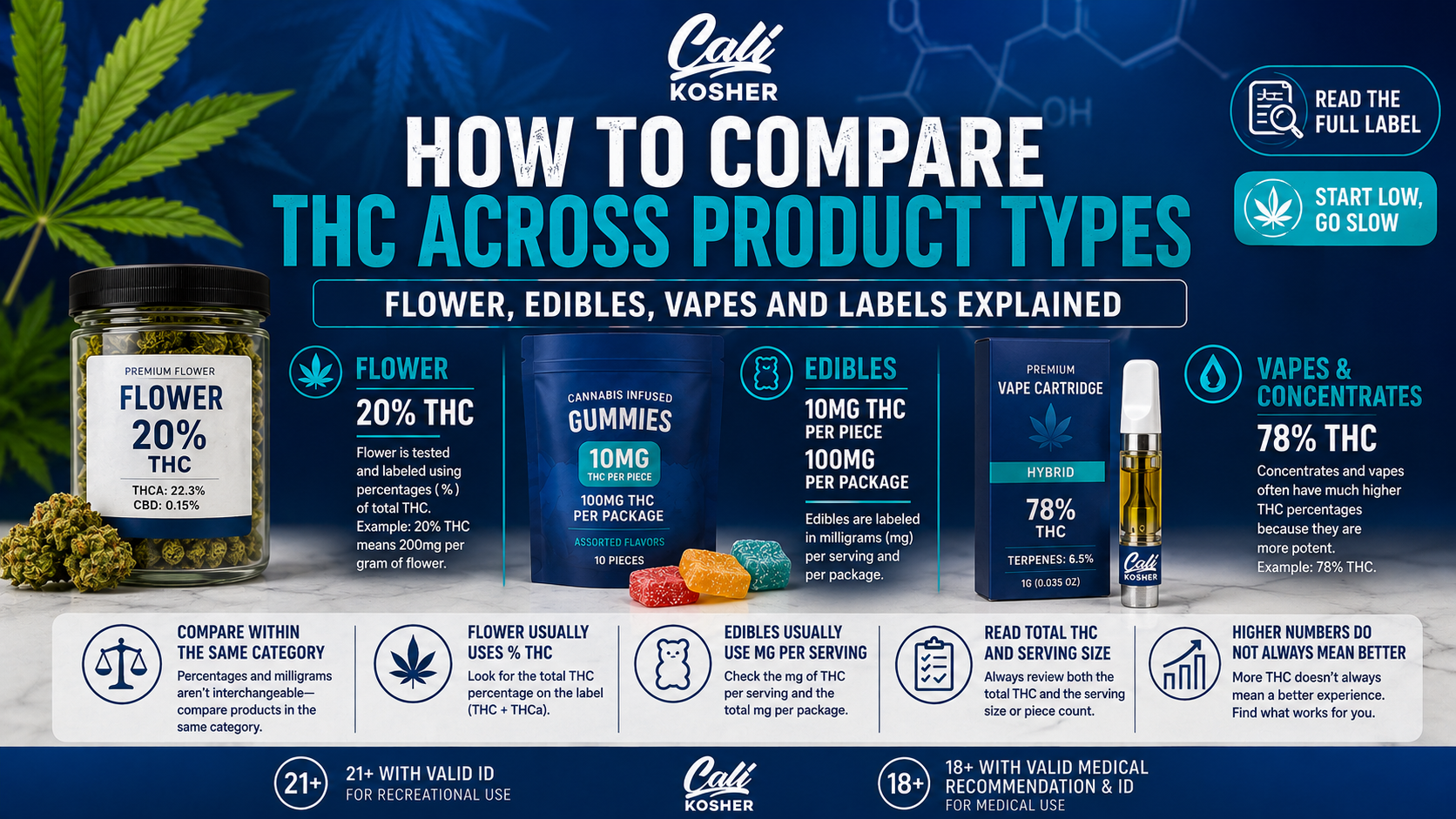
THC potency is not displayed the same way across every cannabis category.
Flower, vape oils, and concentrates commonly use percentages because the number represents concentration relative to the product’s weight. Edibles, beverages, capsules, and similar manufactured products are generally labeled in milligrams.
This difference matters because percentages and milligrams should not be compared as though they measure the same thing.
Cannabis Flower
Cannabis flower is usually labeled with a total THC percentage.
If one gram of flower is labeled at 20% total THC, it contains approximately 200 milligrams of total potential THC by weight before use.
The amount that reaches the body can vary based on:
- How much flower is used
- Whether it is smoked or vaporized
- How deeply the person inhales
- How much burns between inhalations
- The efficiency of the device
- Individual consumption habits
For these reasons, the percentage cannot guarantee exactly how strong the experience will feel.
The condition of the flower also matters. Freshness, aroma, moisture, storage, cultivation practices, and overall product consistency may all affect a shopper’s opinion of its quality.
Vapes and Concentrates
Vape oils and concentrates often show much higher THC percentages than flower because cannabinoids are extracted and concentrated.
Concentrates may include:
- Wax
- Badder
- Shatter
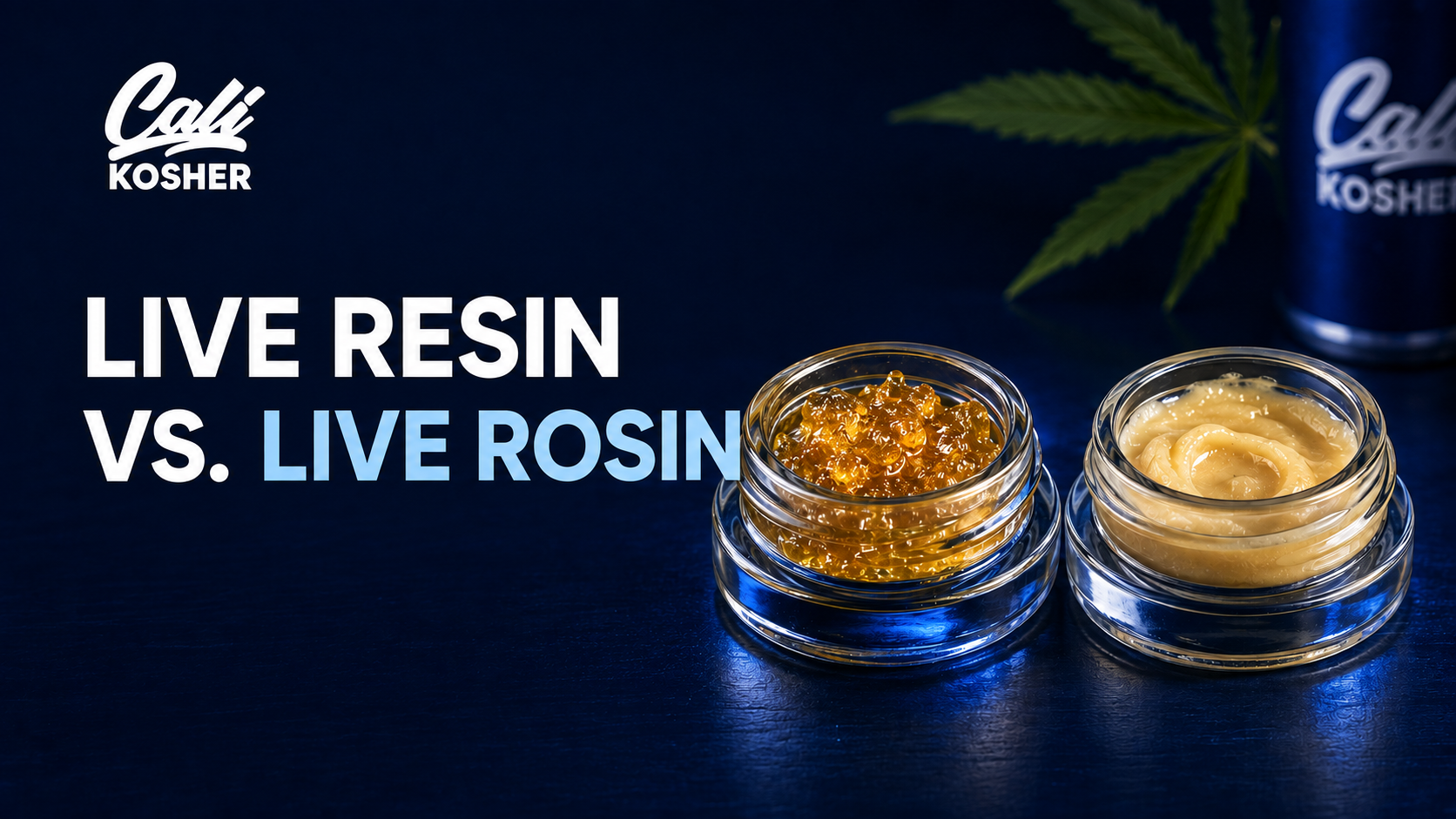
- Live resin
- Rosin
- Sauce
- Diamonds
These products may differ in consistency, flavor, extraction method, cannabinoid content, terpene content, and concentration.
A concentrate labeled at 70% THC contains approximately 700 milligrams of THC per gram by weight. Because it is highly concentrated, a relatively small amount may contain considerably more THC than the same weight of flower.
Two concentrates with similar THC percentages may still differ. One may contain more terpenes or a broader cannabinoid profile, while another may be formulated primarily around THC concentration.
Shoppers can browse Cali Kosher’s selection of cannabis concentrates to compare available product types and label information.
Edibles
Edibles are normally measured in milligrams rather than THC percentage.
The label should show how much THC is contained in one serving and how much is contained in the entire package. This is especially important because a single package may hold several servings.
For example, a package of ten gummies may contain 100 milligrams of THC in total. If each gummy represents one serving, each piece contains 10 milligrams.
California manufactured cannabis labels must show THC and CBD in milligrams per package. Edibles must also show the cannabinoid amount per serving.
Cali Kosher’s cannabis edible selection includes products in different flavors, formats, serving sizes, and cannabinoid combinations.
Because edible effects are delayed, consuming another serving too quickly may result in stronger effects than intended. Consumers should review the serving size and allow enough time to understand how the initial serving affects them.
Why THC Test Results May Vary
Licensed cannabis products in California must be tested before being sold. Testing laboratories check batches for cannabinoids and required safety measurements. Results are documented in a Certificate of Analysis, commonly called a COA.
Laboratory results are based on a representative sample collected from a harvest or production batch. The label must be consistent with the cannabinoid information reported on the applicable COA.
Cannabis is an agricultural product, so cannabinoid levels may not be perfectly identical throughout every portion of a batch. Genetics, lighting, nutrients, temperature, humidity, harvest timing, drying, moisture, and storage may all contribute to variation.
The COA remains the regulated measurement used for product labeling, but it cannot guarantee that every bud or every consumer will have an identical experience.
THC Percentage Is Not the Same as Quality
One common misconception is that the product with the highest THC percentage must be the best cannabis.
Consumers may evaluate a cannabis product using factors beyond THC potency, including:
- Cultivation and harvesting practices
- Freshness and storage
- Aroma and flavor
- Cannabinoid balance
- Terpene profile
- Appearance and trim
- Product consistency
- Testing and manufacturing standards
- Personal preferences
Some consumers may prefer flower with moderate THC and a strong aroma or balanced cannabinoid profile. Others may be interested in products containing CBD or additional cannabinoids.
The right choice depends on the person, the setting, the serving amount, and the type of experience they prefer.
Cali Kosher manages cannabis through cultivation, distribution, and retail, providing greater oversight throughout the seed-to-sale process. Consumers can learn more about Cali Kosher and its approach to cannabis in California’s Central Valley. The company states that it handles cultivation, processing and retail operations while following kosher and EnvirOganic standards.
The Role of Cannabinoids and Terpenes
Cannabis contains many compounds in addition to THC.
CBD, CBG, CBN, and other cannabinoids may appear in different amounts depending on the product. Two products with the same THC percentage can still have different overall cannabinoid profiles.
Terpenes are aromatic compounds that contribute to the scent and flavor of cannabis. Depending on the product, consumers may notice aromas described as:
- Citrus
- Pine
- Fruit
- Spice
- Earth
- Floral
- Fuel
Terpene information gives shoppers another way to compare products beyond THC potency.
Researchers continue to study whether and how terpenes interact with cannabinoids to influence the overall cannabis experience. However, a terpene label cannot guarantee that a product will create a specific effect.
Labels are best used as comparison tools rather than promises about exactly how a product will feel.
How to Choose the Right THC Percentage
Choosing a THC percentage begins with considering personal tolerance, product type, and serving size.
Someone with limited experience may prefer a lower-concentration product or a smaller amount. Experienced consumers should also use care when switching from flower to concentrates or from inhaled cannabis to edibles.
Rather than choosing based on one number, review the complete package. Check:
- Total THC
- THC per serving
- Total servings
- Product weight
- CBD and other cannabinoids
- Available terpene information
- Testing details
- Use instructions
Begin with a small amount when trying an unfamiliar product. Because edible effects are delayed, allow enough time to understand the initial serving before considering more.
Avoid combining cannabis with alcohol. Using cannabis and alcohol together may increase impairment compared with using either substance alone.
Never drive after using cannabis. Knowledgeable budtenders can also help adult shoppers understand labels and compare products within the same category.
Compare Products with Confidence at Cali Kosher
THC percentage can help shoppers compare similar cannabis products, but it should not be the only detail they consider.
Serving size, product type, personal tolerance, cannabinoids, consumption method, and other individual factors can all influence the experience.
The best approach is to read the full label, compare products within the same category, and choose an amount that fits your experience level. Flower should be compared with other flower, while concentrates, vapes, and edibles should be evaluated within their own categories.
The Cali Kosher menu includes flower, pre-rolls, concentrates, vapes, edibles, tinctures, topicals, and accessories from California cannabis brands. Adults who need help understanding THC levels or comparing products can contact Cali Kosher or speak with a knowledgeable budtender at a Cali Kosher storefront in Modesto, Oakdale, or Patterson.
SHARE: